
There are two products called falernum. They taste similar. They’re not interchangeable.
In 1890, John D. Taylor of Bridgetown, Barbados created what’s now considered the original falernum. But here’s the thing – that was a liqueur, bottled at 11% ABV. Today, most cocktail recipes just say “falernum” without specifying which kind. The result? Drinks that are either too sweet or not sweet enough, depending on which bottle you grabbed.
We’ve watched bartenders substitute one for the other and wonder why the drink tastes off. The confusion is understandable. Both products share a name, similar flavour profiles, and often sit next to each other on shelves. But using syrup when a recipe calls for liqueur, or vice versa, throws off the entire balance.
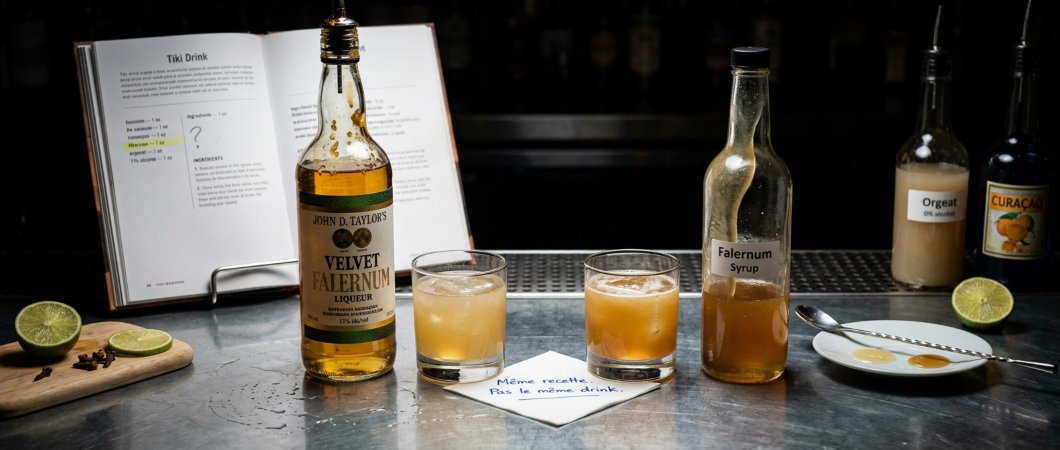
The critical difference
Falernum syrup = 0% ABV (or up to 5% in some brands). Functions as a sweetener with spice.Velvet Falernum = 11% ABV liqueur. Functions as a modifier that adds both alcohol and sweetness.In a Zombie or Mai Tai, using syrup instead of liqueur means you’re adding sweetness without the alcoholic structure the recipe expects. The drink will taste flat.
Falernum Syrup vs Velvet Falernum
Falernum Syrup
0–5%
Sweeter, spicier, thicker mouthfeel. Gives more control over sweetness. Non-alcoholic versions work for mocktails.
VS
11%
Softer, more integrated flavour. Adds spirit structure. The “original” style from Barbados.
For classic tiki recipes from the 1940s–60s, they typically meant the liqueur. Modern craft recipes often call for syrup to give bartenders more control. When in doubt, look at the rest of the recipe – if there’s already a lot of sweetener, they probably meant liqueur. If the drink seems under-sweetened on paper, it’s probably syrup.
What Falernum Tastes Like
The flavour profile is consistent across both formats. Lime zest, cloves, almond, and ginger form the backbone. Some versions add allspice or nutmeg. The exact proportions vary by maker. That’s where the differences emerge.
🍋
Lime Zest
Citrus brightness
🌸
Clove
Warm spice
🥜
Almond
Creamy nuttiness
🫚
Ginger
Gentle heat
🍬
Sugar Cane
Base sweetness
✨
Allspice
Optional warmth
The name itself is disputed. Some trace it to Latin “falernum” – a strong white wine from ancient Rome. Others suggest it comes from a word meaning “throat” in Bajan dialect, referencing its soothing properties. Nobody knows for certain. The records from 1820s–1890s Barbados weren’t exactly meticulous about etymology.
Orgeat is not falernum
Both are almond-flavoured syrups. But orgeat is almond-forward with orange blossom water, while falernum leads with lime and spice. They’re not substitutes for each other – a Mai Tai needs both.
Where to Buy Falernum in Canada
Options have expanded significantly since 2020. Here’s what you’ll find:
Syrups (0–5% ABV)
Prosyro Falernum
🍁 Canadian
340ml • 5% ABV (contains rum)
Heavy clove and peppery notes, fresh pressed ginger, good lime presence. pH-calibrated for shelf stability – no refrigeration needed after opening. This is the spiciest option on this list. Works particularly well with dark rums.
$18 at Cocktail Emporium, Alambika
Social Syrup Falernum
🍁 Ontario
Non-alcoholic
Ontario-based company focused on “exotic and fresh” flavours. Their falernum features almond, ginger, clove, and lime. Less aggressive spice than Prosyro. Good mocktail option.
Available at Willow Park, specialty stores
BG Reynolds Falernum
US Import
Non-alcoholic • Rich ratio (more sugar, less water)
Made by a guy who’d been making his own falernum for a decade before commercial options existed. Uses cane and brown sugars. Spicier and more robust than liqueur-based options. The tiki purist’s choice.
$20–25 at specialty cocktail shops
Giffard Falernum
French
Non-alcoholic • 1L bottles
Intense lime, ginger, nutmeg, clove, and rum notes – without the actual rum. Often used in commercial bars for consistency. The safe, reliable option.
$22 at bar supply stores
Liqueur (11% ABV)
John D. Taylor’s Velvet Falernum
11% ABV
Barbados • Produced by R.L. Seale (Foursquare)
The canonical falernum liqueur. Softer, more integrated flavour than syrups. Sugar cane base with lime, almond, and clove. Created in 1890, still produced by the same distillery that makes Doorly’s and other respected rums. This is what classic tiki recipes meant when they said “falernum.”
$25–30 at LCBO, SAQ, specialty liquor stores
Worth noting: Liqueur Falernum from other brands (Marie Brizard, some craft distillers) can have ABVs ranging from 11% to 24%. Check the bottle. Higher-proof versions are even less interchangeable with syrups.
Cocktails That Need Falernum
Falernum isn’t a garnish ingredient. In these drinks, it’s structural – remove it and the cocktail falls apart.
Corn ‘n’ Oil
Barbados • The original falernum showcase
- Blackstrap or dark rum2 oz
- Velvet Falernum½ oz
- Fresh lime juice½ oz
- Angostura bitters2–3 dashes
Build over crushed ice. Stir briefly. Lime wheel garnish.
The name supposedly comes from the drink’s appearance – dark rum layered with falernum looks like corn oil floating on water. Whether that’s true or a bartender myth, who knows. What matters: this drink doesn’t work without falernum. The liqueur version is traditional here.
Royal Navy Grog
Trader Vic’s, 1940s
- Dark Jamaican rum1 oz
- Gold Demerara rum1 oz
- White Puerto Rican rum1 oz
- Falernum (syrup or liqueur)¾ oz
- Fresh lime juice¾ oz
- Fresh grapefruit juice¾ oz
- Honey syrup¼ oz
- Allspice dram1 tsp
Shake hard with crushed ice. Pour unstrained. Mint sprig garnish.
Most bars substitute honey syrup for the falernum here. That’s wrong. The spice and lime from falernum are what separate a Royal Navy Grog from just another rum punch. Trader Vic specified falernum for a reason.
Other drinks where falernum matters
Zombie – The multi-rum tiki classic. Falernum (syrup preferred) adds sweetness and spice structure across the complex rum blend.
Chartreuse Swizzle – Modern classic from Marcovaldo Dionysos, 2003. Falernum syrup balances the herbal intensity of green Chartreuse.
151 Swizzle – Needs a heavy pour of falernum to stand up to overproof rum. Dilution and spice are both essential.
Three Dots and a Dash – Don the Beachcomber’s WWII-era creation. The name is Morse code for “V” (victory).
Making Your Own Syrup
Homemade falernum syrup keeps 2–4 weeks refrigerated. It’s not difficult, but it’s also not quick – proper infusion takes time.
Basic ratio
- Zest of 8–10 limes
- 30 whole cloves
- 1 oz fresh ginger, sliced
- 1 cup blanched almonds, roughly chopped
- 2 cups white rum (for infusion, not alcohol content)
- 2 cups sugar
- 1 cup water
Infuse the zest, cloves, ginger, and almonds in rum for 24–48 hours. Strain. Make a simple syrup with the sugar and water. Combine. Adjust to taste. The homemade version will be cloudier and less stable than commercial options, that’s normal.
Honestly? Unless you’re making falernum regularly or want a specific flavour profile commercial brands don’t offer, buying it is easier. An $18 bottle makes dozens of drinks and lasts months.
Questions About Falernum
No. They’re both nut-based syrups, but the flavour profiles are completely different. Orgeat is almond-forward with orange blossom. Falernum is lime and spice-forward with background almond. Some tiki drinks use both.
Commercial syrups with proper pH calibration (like Prosyro) are shelf-stable for 12+ months, even after opening. Liqueur-based versions last even longer due to the alcohol content. Homemade syrup should be refrigerated and used within a month.
Look at the recipe’s age and sweetness level. Classic tiki recipes (pre-2000s) usually meant liqueur. Modern craft recipes often mean syrup. If the drink already has a lot of sweetener, use liqueur. If it seems under-sweetened, use syrup.
BG Reynolds is probably the closest in terms of flavour intensity. But the alcohol in Velvet Falernum does affect mouthfeel and integration – syrup versions will always taste a bit different in the final drink.
Absolutely. Works in marinades for pork or chicken. Adds interest to iced tea or sparkling water. Some people drizzle it over fruit or ice cream. The lime-ginger-spice profile is versatile beyond drinks.